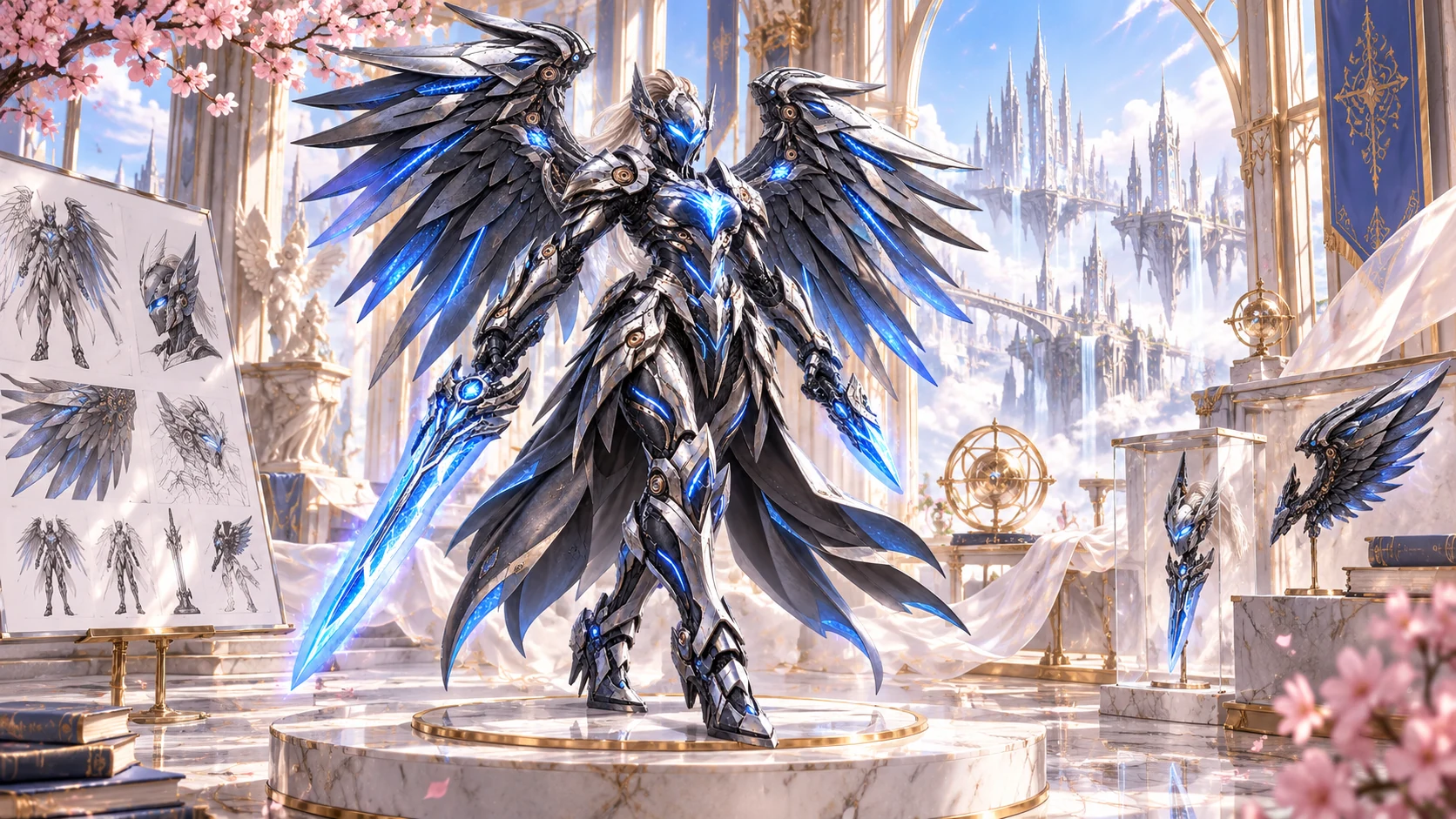
A container that remains part of the design
A model’s box usually disappears after assembly. With chitocerium VI-carbonia lonsdaleite, the hexagonal box is part of the object being presented: Good Smile says that the fragment and its armaments fit inside it. The contrast between the figure outside and the contained object offers a way to appreciate the design that does not begin with a poseability ranking.
An original world supplies the vocabulary
The official chitocerium site introduces a world of creation and calls its inhabitants fragments. Lonsdaleite is one separately named model within that setting. The word gives the figure a place in an original fictional system, rather than requiring the collector to recognise a role from an existing television anime.
The container can therefore be read as part of that world’s visual language. That is an interpretation of the documented object relationship, not an additional claim about lonsdaleite’s biography. Stories attached to other named fragments do not automatically become this character’s story.
The assembled sample is an invitation, not the contents
The product credits Masaki Apsy with planning and huke with design, and lists four face parts. It is an assemblable plastic model. Good Smile identifies the product images as painted, assembled samples, an important distinction if the finished presentation is what first catches your eye.
Someone drawn to building a designed figure and considering how its parts relate to the box has a concrete reason to look closer. Someone wanting the photographed finish as a ready-made object needs a different expectation.
Keep both states in view
For this model, the figure and the container are worth considering together. An open display emphasises the fragment’s presence; the documented fit inside the hexagon makes containment another part of its identity. Neither reading requires claiming that the box protects it during travel. The cultural interest is that the character’s designed world continues beyond the outline of the body.
Sources & further reading
Editorial review date: